
Key Takeaways
- Not all LED mirror dimming systems work in the same way.
- Touch sensors, long-press dimming, and memory functions each affect daily usability.
- Some mirrors allow brightness and colour temperature adjustment separately.
- Advanced models integrate smart controls and Bluetooth functionality.
- Choosing the right dimming system depends on bathroom size, lighting needs, and personal routine.
When choosing an illuminated mirror, most people focus on shape, size, or whether it is backlit or frontlit. But the dimming system is just as important. It determines how the mirror feels to use every day. It affects your morning routine, evening wind down, and even how well you can apply makeup or shave.
At plan your LED mirror upgrade, we specialise in smart, feature-rich illuminated mirrors designed for UK homes. Because we work closely with different lighting technologies across our range, we understand how dimming systems truly compare in real-world use. This guide breaks down the main LED mirror dimming technologies so you can make an informed decision.
Why Dimming Technology Matters in LED Mirrors
Bathrooms rarely have a single lighting requirement. Early mornings demand bright, clear light. Late evenings benefit from something softer. If your mirror only operates at one fixed brightness, you lose flexibility.

Dimming technology allows you to:
- Adjust brightness based on time of day
- Reduce glare in smaller bathrooms
- Improve comfort during night use
- Match ambient lighting in larger spaces
- Create a more relaxing environment
If you are unsure how LED mirrors generate and control light in the first place, we explain the fundamentals in our guide on how illuminated bathroom mirrors actually work.
1. Basic Touch On-Off with Preset Brightness
How It Works
This is the simplest configuration. A touch button turns the mirror on and off. Brightness is pre-set by the manufacturer and cannot be adjusted.
Pros
- Straightforward operation
- Fewer electronic components
- Suitable for smaller bathrooms
Limitations
- No flexibility in brightness levels
- May feel too bright at night
- Cannot adapt to different lighting tasks
While this setup is reliable, it does not offer the control most modern households expect. For this reason, at LED Mirror World we focus primarily on adjustable systems across our collections.
2. Long-Press Touch Dimming
How It Works
Why It Is Popular
- Smooth brightness transition
- Easy to use
- No external dimmer switch required
- Clean, minimal interface
Many mirrors in our compare frontlit and backlit mirror styles use this technology because it balances simplicity with flexibility. The user can fine tune brightness without installing additional controls.
What to Consider
Brightness adjustment is typically linear. You hold the button until the desired brightness is reached. This can take a few seconds but becomes intuitive with regular use.
3. Independent Brightness and Colour Temperature Dimming
Not all dimming systems only adjust brightness. Some mirrors allow you to control colour temperature separately from brightness.
How It Works
These mirrors include two control functions:
- Brightness dimming
- Colour temperature switching, usually between warm white, neutral white, and cool white
If you are unsure how colour temperature influences clarity and skin tone appearance, our article explaining what colour temperature means in LED mirrors provides helpful detail.
Practical Benefits
- Cool white for grooming precision
- Neutral white for general use
- Warm white for evening relaxation
- Custom brightness within each tone
A strong example is the bathroom mirrors designed for clearer glass, which combines brightness control with adjustable light tone. This dual adjustment gives significantly more flexibility than basic dimming alone.
4. Memory Function Dimming
How It Works
Memory dimming remembers your last brightness and colour settings. When you turn the mirror off and back on, it returns to the same configuration.
Why This Matters
Without memory, you must reset brightness each time. With memory:
- Your preferred morning setting stays saved
- Night mode remains soft
- No repeated adjustment required
Our makeup mirrors with practical lighting includes this feature. It is especially practical in family bathrooms where consistency is important.
Memory dimming is often overlooked, but in daily use it significantly improves convenience.
5. Smart and Bluetooth-Integrated Dimming
How It Works
Smart LED mirrors integrate lighting controls with additional features such as Bluetooth speakers, digital displays, and sometimes touch panels with multiple control zones.
Dimming is typically managed through:
- Multi-function touch sensors
- Separate light mode controls
- Digital interface
Our storage-friendly LED mirror cabinets demonstrates how advanced dimming works alongside additional features. You can adjust brightness while also managing audio and display settings.
If you are considering whether connected features are worth it, our guide discussing whether smart LED mirrors justify the investment may help you decide.
6. Front-Lit vs Backlit Dimming Experience
Dimming technology does not operate in isolation. It interacts with the lighting style of the mirror.
Front-Lit Mirrors
Light shines directly forward. Dimming affects facial illumination intensity. These are ideal for grooming precision.
Backlit Mirrors
Light glows from behind, creating ambient wall illumination. Dimming adjusts atmosphere more than task clarity.
Our guide comparing front-lit and back-lit LED bathroom mirrors explains how dimming feels different between these two types.
The choice depends on whether your priority is task lighting or mood lighting.
7. Multi-Zone and Dual-Light Dimming
Some higher specification mirrors include both front and back lighting. In certain designs, brightness control applies to both simultaneously. In others, zones may be adjusted together but produce layered lighting effects.
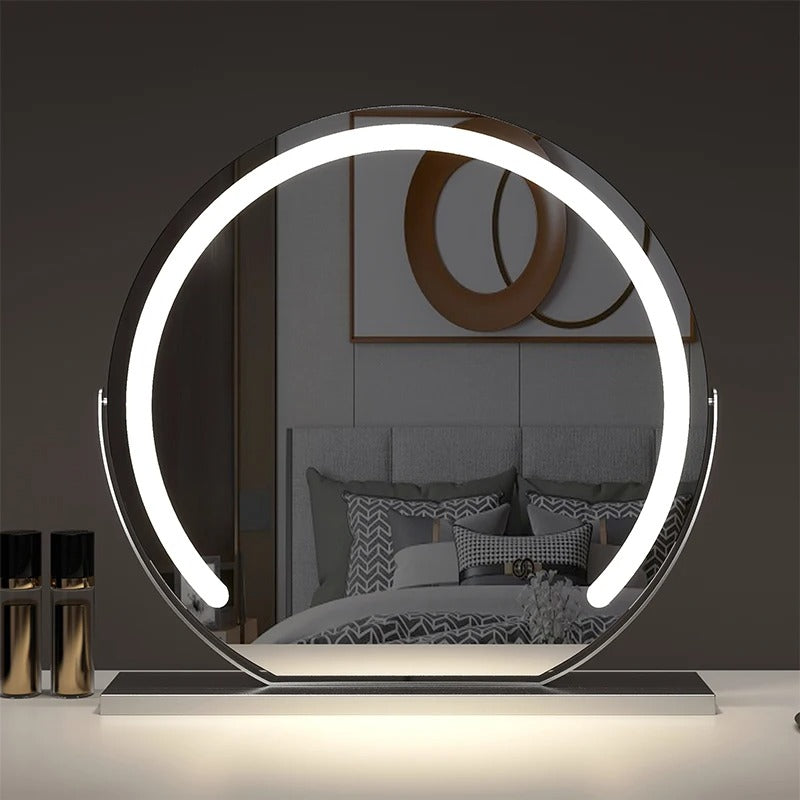
For example, the compare dimmable LED mirror options provides both direct and ambient lighting. When dimmed, the balance between front and rear illumination creates depth rather than simply reducing brightness.
This layered approach works particularly well in larger bathrooms where lighting needs to feel cohesive.
Which Dimming System Is Right for You?
There is no universal answer. It depends on:
- Bathroom size
- Existing ceiling lighting
- Time of day usage patterns
- Whether the mirror is primary light source
- Personal comfort preference
For Small Bathrooms
Long-press dimming with adjustable colour temperature works well. It prevents glare and adapts to limited space.
For Large Bathrooms
Dual-light or memory dimming offers greater flexibility and consistent performance.
For Tech-Focused Homes
Smart dimming integrated with Bluetooth mirrors provides a seamless experience.
At LED Mirror World, we design our range around practical everyday use. Our goal is not to overwhelm with unnecessary complexity, but to provide lighting systems that genuinely improve daily routines.
Energy Efficiency and Dimming
Dimming reduces power consumption because LEDs operate at lower output when brightness is decreased. While savings vary depending on usage, adjustable brightness contributes to overall energy efficiency over time.
If you are interested in performance and longevity, our article explaining how long LED mirror lights typically last covers durability factors in more depth.
Final Thoughts
Dimming technology is not just a specification detail. It shapes how your bathroom feels and functions. The difference between fixed brightness and adjustable memory dimming becomes clear the moment you use the mirror daily.
At LED Mirror World, we focus on intelligent lighting control, anti-fog performance, and modern design. Whether you prefer minimalist backlit mirrors or feature-rich smart models, understanding dimming technology helps you choose confidently.
If you would like guidance selecting the right dimming system for your space, our team is always happy to help.
Ready to Upgrade Your Bathroom Lighting?
Speak to us about your project and we will recommend the most suitable dimming technology for your needs.
Frequently Asked Questions
What is the most common LED mirror dimming method?
Long-press touch dimming is the most common. It allows gradual brightness adjustment using a built-in touch sensor.
Can I change both brightness and colour temperature?
Yes. Many modern LED mirrors allow separate control of brightness and colour temperature, usually offering warm, neutral, and cool light modes.
Does dimming reduce electricity use?
When brightness is lowered, LEDs draw less power. This can contribute to improved energy efficiency over time.
What is memory function in LED mirrors?
Memory function saves your last brightness and light colour setting so the mirror restores the same configuration when switched back on.
Are smart LED mirrors harder to operate?
Not necessarily. Most smart models use intuitive touch controls. The additional features are integrated into simple interfaces.
Is backlit dimming better than front-lit dimming?
They serve different purposes. Backlit dimming adjusts ambience. Front-lit dimming directly affects facial illumination and task clarity.
Do all LED mirrors support dimming?
No. Some entry-level mirrors have fixed brightness. Always check product specifications to confirm adjustable dimming is included.