
Key takeaways
- The purchase price of a smart LED mirror covers the product only - installation, electrical preparation, and any necessary wiring work are separate costs that vary depending on the bathroom's existing setup
- Hardwired smart LED mirrors require a qualified electrician for installation in a UK bathroom, and this cost should be factored into the total budget before purchasing
- Running costs for LED mirrors are low compared to traditional bulb-based lighting, but smart mirrors with Bluetooth, displays, and anti-fog functions draw slightly more power than basic LED models
- Maintenance costs are generally modest for quality mirrors, but features like Bluetooth modules, touch sensors, and demister pads represent additional components that can need attention over time
- The three-year warranty included with LED Mirror World mirrors covers electronic component failures, which significantly reduces unexpected repair costs during that period
- Buying from a UK-based supplier with local stock reduces delivery risk and avoids the import-related complications that can arise when ordering from overseas
This is not a reason to avoid smart LED mirrors. The running costs are genuinely low, the lifespan is long, and for most UK homes a well-specified smart mirror is a sensible long-term investment. But going in with a clear view of what costs exist beyond the product price prevents the kind of surprise that can sour an otherwise good purchase decision. At start with LED mirror styles, we think transparency is more useful than optimism, so this guide lays out the full picture honestly.

The Purchase Price: What It Does and Does Not Cover
The retail price of a smart LED mirror covers the mirror, its integrated components, delivery to your door (free on all LED Mirror World orders), and in our case a three-year warranty on electronic components. What it does not cover is any preparatory electrical work your bathroom may need, the cost of installation, or any mounting hardware that is not included in the product.
This distinction matters more for smart LED mirrors than for simpler models, because smart mirrors - those with Bluetooth speakers, time and temperature displays, RGB lighting, or multiple touch-controlled functions - are almost always hardwired models. They draw more power than a simple plug-in illuminated mirror and they are designed for permanent installation rather than portable use. This means that the electrical connection to the mirror is part of the installation process, not something the mirror comes ready to plug into.
Electrical Installation: The Cost That Catches Buyers Off Guard
In the UK, hardwired electrical work in a bathroom is not something that can be left to casual DIY. It falls under Part P of the Building Regulations in England and Wales, and similar requirements exist across Scotland and Northern Ireland. Work must either be carried out by a registered competent person - such as a member of NICEIC, NAPIT, or ELECSA - or notified to the local authority building control department. Standard 13-amp plug sockets are not permitted inside UK bathrooms, so smart LED mirrors connect via a fused spur or directly into the circuit.
The cost of having a qualified electrician install a bathroom LED mirror varies depending on location, the complexity of the existing circuit, and whether a fused spur is already in place or needs to be installed. Where no existing provision is in place and a new cable run is needed - particularly in a bathroom that has already been tiled - the cost can be noticeably higher. Our post on how wiring and electrical safety rules apply to bathroom LED mirrors in the UK explains these requirements in plain language, and is worth reading before finalising a budget.
The practical implication is that buyers should obtain an electrician quote before purchasing a smart LED mirror, particularly if the bathroom has no existing fused spur in a suitable position. If one is already in place from a previous mirror installation, the cost of connection may be minimal. If the bathroom has never had a hardwired mirror, the additional cost can be meaningful.
Running Costs: Lower Than Many Buyers Expect
LED technology is considerably more energy-efficient than traditional incandescent or halogen bulbs. A smart LED bathroom mirror typically consumes between 20W and 45W depending on its size, the number of LED strips, and which features are active. At typical UK usage of one to two hours per day, the annual electricity cost is modest.
A smart mirror with Bluetooth speakers, a demister pad, and a digital display will draw slightly more power than a simple backlit mirror without these features, because each active component adds to the overall draw. The demister pad - which works by heating the glass surface - is typically the most power-hungry additional feature when active, though it only runs during and shortly after showers rather than continuously.
The memory function on many smart mirrors - which retains the last-used lighting setting and restores it on next switch-on - does not create a meaningful standby draw in most models. The display on mirrors with time and temperature readouts does draw power continuously while the mirror is connected to mains, but the consumption involved is very small.
Compared with running a separate Bluetooth speaker, a separate clock, a separate shaving light, and a traditional mirror with overhead bulb fitting, a smart LED mirror consolidates multiple power draws into a single, energy-efficient unit. Over time, this consolidation can reduce rather than increase energy spending.
Maintenance Costs: Modest but Worth Planning For
A well-constructed smart LED mirror from a reputable supplier requires minimal routine maintenance beyond gentle cleaning. The LED strips themselves are rated for 30,000 to 50,000 hours of operation, which at typical bathroom use represents many years before any degradation. The driver - the electronic component that regulates power to the LEDs - typically lasts for several years in normal conditions.
Where maintenance costs can arise is in the additional components that smart mirrors contain. A Bluetooth module, a touch sensor array, a demister pad, or a digital display each represent a component that, over time and with sustained humidity exposure, may need attention. Our post on what makes premium LED mirrors worth investing in and how component quality affects longevity explains how build quality at the component level affects long-term maintenance requirements.
The key question when buying a smart mirror is whether the design allows individual components to be replaced if needed. At LED Mirror World, our mirrors use terminal connection construction, meaning components including LED strips, drivers, and accessories can be replaced independently without replacing the entire unit. This design approach directly reduces the lifetime maintenance cost of a smart mirror compared to models with integrated, non-replaceable assemblies.
The three-year warranty on all LED Mirror World products covers manufacturing defects in electronic components including LED modules, drivers, touch sensors, Bluetooth modules, and demister pads. This is a meaningful protection against unexpected costs during the warranty period.
The Cost of Choosing the Wrong Specification
One hidden cost that rarely appears on any list is the cost of buying a mirror that does not actually suit the bathroom - either because the features chosen are not used, or because a feature needed was not included and cannot be added later.
A smart mirror purchased for a small cloakroom that is used occasionally for hand-washing does not need Bluetooth speakers, a temperature display, and RGB lighting. Those features add to the purchase price without adding equivalent value in that context. Conversely, a mirror purchased for a main bathroom used daily by two people, in an area with hard water and regular steam, that lacks anti-fog and adjustable colour temperature will generate ongoing frustration that a higher-specified model would have avoided.
Taking the time to match the mirror's specification to actual usage patterns - time of use, number of users, the specific grooming and lighting tasks it supports, the bathroom's water hardness and humidity levels - produces a lower overall cost than choosing based on the feature list alone.
Which Smart Mirrors Represent Good Value at LED Mirror World
For buyers looking at smart LED mirrors with a full set of features, three models in the LED Mirror World range are worth considering with the total cost picture in mind.
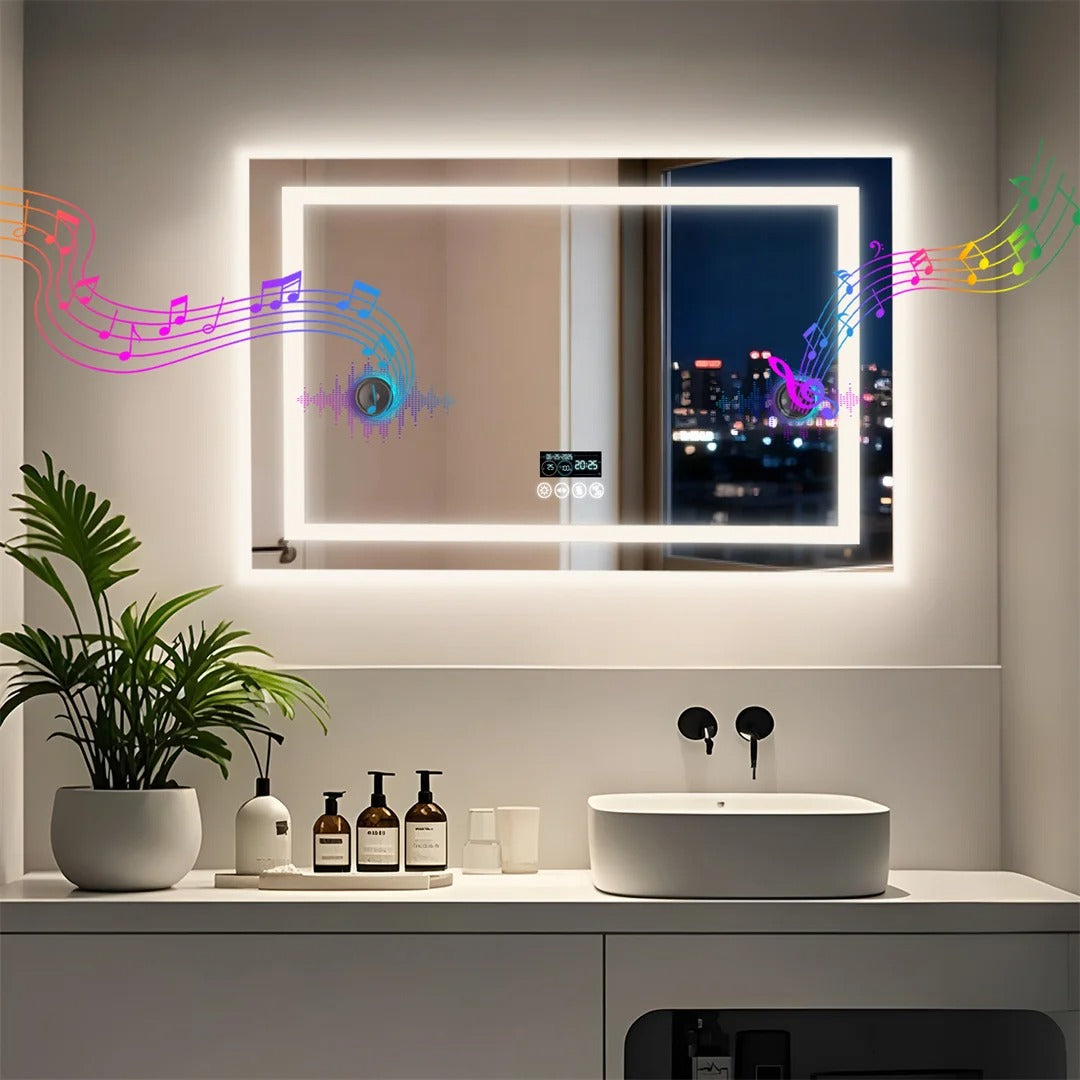
The smart mirrors with built-in speakers combines double-light illumination, Bluetooth audio, and a digital display in a square format. Its verified customer reviews reflect consistent satisfaction, and its feature set covers the most commonly used smart functions without unnecessary additions that drive price upward.
The Bathroom Mirror Cabinet with Lights and Bluetooth Speaker offers something that a flat mirror cannot: integrated storage alongside smart lighting and audio. For bathrooms where counter space is limited and a separate cabinet would otherwise be needed, this consolidation represents genuine value - the cost of the mirror replaces two separate purchases. Fourteen five-star verified customer reviews speak to its consistent performance in real bathrooms.
For buyers who want smart features across a range of sizes, our audio-friendly bathroom mirror options includes mirrors from compact oval formats to large rectangle models, all with integrated speakers and LED lighting. For those specifically focused on double-light performance without Bluetooth, our ambient bathroom mirror lighting covers a wide selection with the most versatile lighting format for shared bathrooms.
Our post on the full comparison of battery-powered versus hardwired LED mirrors and what each approach costs in practice is also a useful read for buyers weighing up how the installation cost dimension differs between these two approaches.
A Practical Summary
The total cost of a smart LED mirror is the retail price, plus electrical installation (which varies and must be quoted for your specific bathroom), plus a modest ongoing running cost, plus the occasional maintenance expense over the mirror's lifetime. A quality mirror with a three-year warranty and individually replaceable components reduces the maintenance risk significantly during and beyond the warranty period.
At LED Mirror World, we stock UKCA and CE certified smart mirrors from UK-based stock, shipped free across the UK. Our team is happy to answer questions about which model suits a specific bathroom layout, whether a mirror's features match the way a bathroom is actually used, or what the installation requirements look like for a given model.
Get in touch with the LED Mirror World team here with any questions.
Frequently Asked Questions
What costs should I budget for beyond the purchase price of a smart LED mirror? Beyond the retail price, the main additional cost is electrical installation by a qualified electrician, which is required for hardwired smart LED mirrors in UK bathrooms. The cost varies depending on whether an existing fused spur is already in place or new wiring is needed. Running costs are low due to LED efficiency. Maintenance costs are modest for quality mirrors with replaceable components and a manufacturer's warranty.
Do smart LED bathroom mirrors use a lot of electricity? No. Smart LED mirrors typically consume between 20W and 45W depending on size and active features. At one to two hours of use per day, the annual electricity cost is low. Features like demister pads and Bluetooth modules add slightly to the draw, but the overall consumption is significantly lower than traditional bulb-based bathroom lighting setups.
Does installing a smart LED mirror in the UK require an electrician? Yes, for hardwired models. In the UK, bathroom electrical work is subject to Part P of the Building Regulations in England and Wales. Work must be carried out by a registered competent person or notified to building control. Standard plug sockets are not permitted inside UK bathrooms, so smart LED mirrors connect via a fused spur or circuit connection. A registered electrician can carry out and self-certify this work.
What maintenance costs do smart LED mirrors have over time? LED strips rated for 30,000 to 50,000 hours rarely need replacement within a typical ownership period at normal use levels. The LED driver and additional smart components - touch sensors, Bluetooth modules, demister pads - can need attention over time. Choosing a mirror with individually replaceable components and a three-year warranty reduces unexpected maintenance costs significantly during the warranty period.
Are smart LED mirrors worth the extra cost compared to basic LED mirrors? This depends on usage. Smart features like Bluetooth audio, digital displays, and anti-fog demisters add genuine daily value in a main bathroom used regularly by one or more people. In low-use spaces like cloakrooms, a simpler LED mirror without smart features often represents better value. Matching the specification to actual usage patterns produces the lowest total cost over time.
What happens if a component fails in a smart LED mirror? For LED Mirror World mirrors within the three-year warranty period, electronic component failures including LED modules, drivers, touch sensors, and Bluetooth modules are covered at no additional cost. For mirrors outside the warranty period, the terminal connection construction used in LED Mirror World products allows individual components to be replaced without replacing the entire mirror, which reduces repair costs.
Do smart LED mirrors cost more to run than standard bathroom lighting? In most cases, a smart LED mirror costs less to run than an equivalent setup using traditional bulb-based lighting because LED technology converts more energy into light rather than heat. The smart features add a small amount to the draw, but the overall running cost of a single smart LED mirror is typically lower than separate fittings providing the same combined lighting, audio, and display functions.