
At LED Mirror World, we regularly support customers before and after installation. One of the most common questions we hear is not about the mirror itself, but about the tools required to install it properly. This guide breaks everything down clearly so you know exactly what you need, why each tool matters, and when professional help may be the better option.
Key takeaways
- The right tools improve safety and installation accuracy
- Wall type and mirror weight influence tool choice
- Electrical tools are essential for powered LED mirrors
- Preparation reduces mistakes and wall damage
- Some installations benefit from professional support
Why using the correct tools matters
LED bathroom mirrors combine glass, electronics, and wall mounting systems. Using incorrect or low-quality tools can lead to uneven mounting, damaged tiles, or unsafe electrical connections.
At LED Mirror World, we encourage careful preparation because a well-installed mirror not only looks better but also performs reliably over time. The tools listed below apply to most LED mirror installations, whether the mirror is plug-in or hardwired.
Before preparing your tools, choose from our LED bathroom mirrors for UK homes and check the installation instructions for your selected model.
Measuring and marking tools
Measuring tape
Accurate measurements are the foundation of a clean installation. A measuring tape ensures the mirror is centred correctly above the basin or vanity and aligned with surrounding fittings.
Incorrect measurements often result in unnecessary drilling or repositioning.
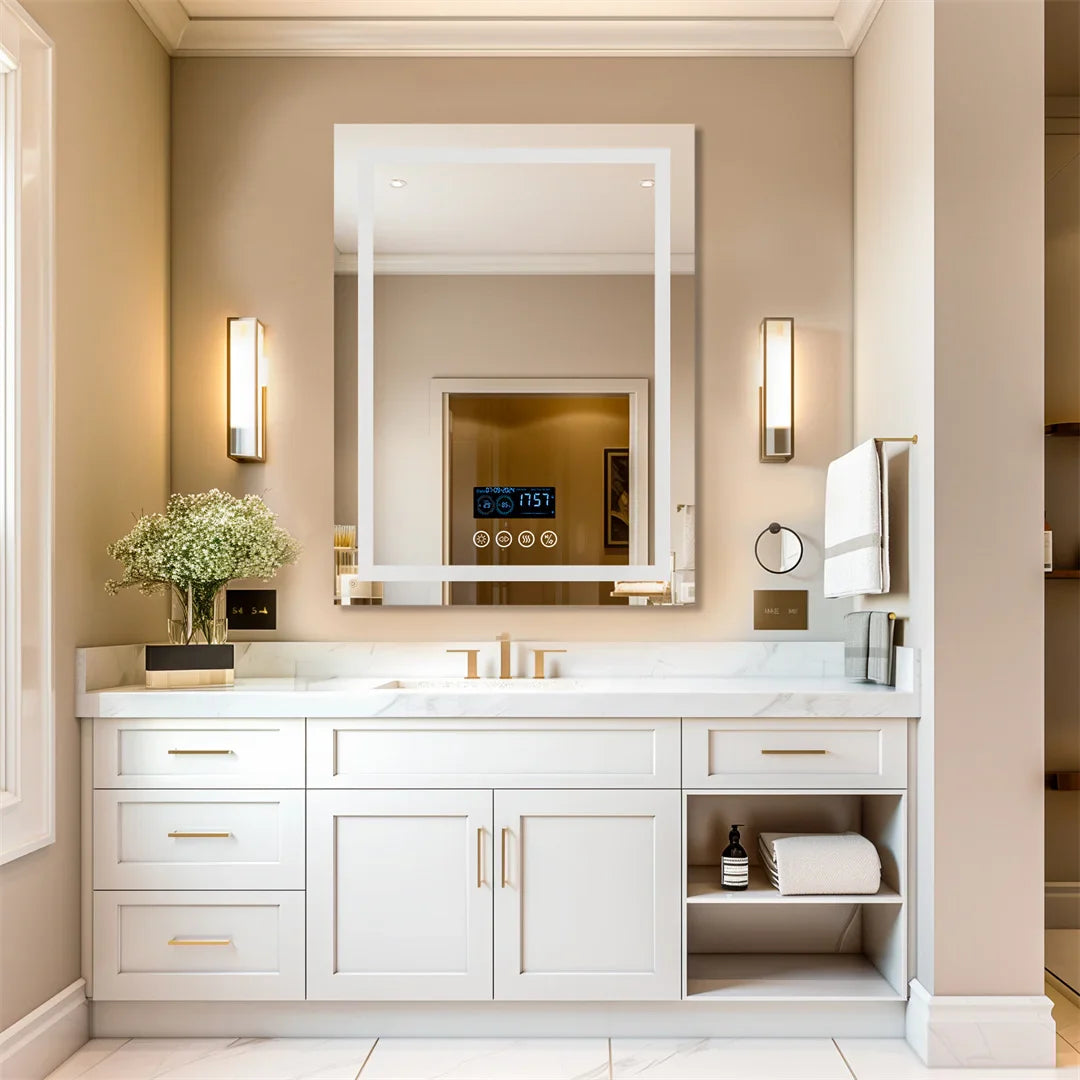
Pencil or non-permanent marker
A simple pencil is essential for marking drill points and mirror outlines. Always avoid permanent markers, especially on tiled surfaces.
Spirit level
A spirit level ensures the mirror sits straight once mounted. Even small misalignments are noticeable in reflective surfaces, particularly with rectangular mirrors.
If you are unsure about ideal mirror placement, our guide on how high a bathroom mirror should be mounted explains positioning in practical terms.
Drilling and fixing tools
Drill with appropriate drill bits
A drill is required for almost all wall-mounted LED mirrors. The type of drill bit depends on the wall surface:
- Masonry bits for brick or concrete
- Tile bits for tiled walls
- Wood or plasterboard bits for stud walls
Using the correct bit reduces cracking and surface damage.
Wall plugs and anchors
Wall plugs must match both the wall type and the mirror weight. Lightweight mirrors may use standard plugs, while heavier LED mirrors require heavy-duty anchors.
Mirrors from the wide mirrors for double vanities often need reinforced fixings to support additional weight safely.
Screwdriver or driver bit
A screwdriver or powered driver is needed to secure mounting brackets and fixings. Ensure the screwdriver head matches the screw type to prevent stripping.
Electrical tools for LED mirrors
Voltage or electrical tester
An electrical tester confirms whether a circuit is live. This is a critical safety tool when working with hardwired LED mirrors.
Never rely on a wall switch alone to confirm power is off.
Wire stripper and cutter
For hardwired installations, wire strippers allow clean removal of insulation without damaging the internal wire. This ensures secure electrical connections.
If you are unsure whether LED mirrors require an electrical connection, our guide on whether LED bathroom mirrors need electricity explains power requirements clearly.
Mounting and handling tools
Wall mounting brackets
Most LED mirrors include a mounting bracket supplied by the manufacturer. This bracket determines how the mirror sits on the wall and must be installed correctly.
Protective gloves
Gloves protect your hands while handling glass and reduce the risk of fingerprints on the mirror surface during installation.
Soft cloth or towel
Placing a soft cloth beneath the mirror during installation helps protect both the glass and surrounding surfaces if adjustments are needed.
Tools for finishing and adjustment
Cleaning cloth
Once installed, a clean cloth removes dust, fingerprints, and installation marks.
Our guide on cleaning an LED bathroom mirror properly explains what to use and what to avoid to protect the lighting and glass.
Small adjustable spanner
Some mounting systems include adjustable fittings that require light tightening. A small spanner helps with final alignment without overtightening.
Tools needed for different LED mirror types
Plug-in LED bathroom mirrors
Plug-in mirrors usually require fewer electrical tools. The focus is on accurate wall mounting, so measuring tools, drill bits, and wall plugs are most important.
A mirror such as the mirrors for steamy shower routines typically uses standard wall fixings and a nearby socket.
Hardwired LED bathroom mirrors
Hardwired mirrors require additional electrical tools and careful safety checks. These installations often benefit from professional electricians, especially in UK bathrooms where wiring regulations apply.
Our step-by-step guide on how to install an LED bathroom mirror explains the full process in more detail.
Product examples and tool considerations
A mirror like the bathroom mirrors designed for clearer glass includes multiple features powered through a single connection. Accurate wiring and secure mounting tools are essential here.
For curved designs such as the 60 cm LED bathroom vanity round mirror with dimmable anti-fog lighting, careful measuring and levelling tools help maintain symmetry and visual balance.

When professional tools and installers are recommended
While many homeowners can manage basic installation, some situations are better suited to professionals:
- New electrical connections
- Large or extra-heavy mirrors
- Tiled walls with concealed pipework
- Limited DIY experience
If a mirror does not function after installation, our troubleshooting guide on common LED mirror power issues covers checks to make before seeking assistance.
Choosing mirrors that simplify installation
Some LED mirror designs are easier to install due to lighter frames or flexible mounting systems. Our soft ambient and task lighting mirrors is popular for its clean design and straightforward installation requirements.
Have your chosen mirror's instructions and supplied fixings ready before installation so you can prepare the right tools and wall support.
Final thoughts
Installing an LED bathroom mirror is far easier when the right tools are ready from the start. Measuring accurately, drilling carefully, and handling electrical connections safely all contribute to a successful result.
At LED Mirror World, we believe good preparation leads to better outcomes. Whether you are installing a simple illuminated mirror or a larger feature piece, understanding the tools involved helps you approach the job with confidence.
Need advice before installing your LED mirror?
Contact our team through our contact page and we will be happy to guide you.
Frequently asked questions
What tools do I need to install an LED bathroom mirror?
Most installations require a drill, spirit level, measuring tape, wall plugs, screwdriver, and basic electrical tools.
Do I need special tools for tiled walls?
Yes. Tile drill bits reduce the risk of cracking tiles during installation.
Is an electrician required for LED mirrors?
For hardwired mirrors or new wiring, a qualified electrician is often recommended.
Can I install an LED mirror with basic DIY tools?
Smaller plug-in mirrors can often be installed with standard household tools.
Do heavier mirrors require different fixings?
Yes. Larger mirrors need heavy-duty wall anchors suitable for the wall type.
Is a spirit level really necessary?
Yes. Even slight misalignment is noticeable with mirrors.
What is the most common installation mistake?
Incorrect measurements or using unsuitable wall fixings are common issues.